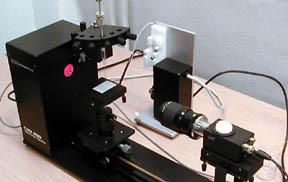


Contact Angle (CA)
Evaluate wettability, surface energy and adhesion properties
Contact angle measurement is a powerful surface characterization technique used to evaluate how liquids interact with solid materials. By measuring the angle formed between a liquid droplet and a surface, the method provides valuable information about wettability, surface free energy, and adhesion properties.
The contact angle can be monitored over time to study dynamic wetting behavior and surface reactions. When measurements are performed using reference liquids with known properties, the surface free energy of the material can also be determined.
This non-destructive technique is widely used in quality control, product development, coating evaluation, and surface treatment optimization across a wide range of industries.
What can contact angle measurement reveal?
- Wettability and hydrophobicity
- Surface free energy
- Adhesion performance
- Surface cleanliness
- Effects of coatings and surface treatments
- Time-dependent wetting behavior
Key benefits
- Non-destructive surface analysis
- Fast and reliable measurements
- Quantitative evaluation of surface properties
- Suitable for quality control and research
- Supports product development and process optimization
Typical applications
- Medical devices and biomaterials
- Adhesion studies
- Coating evaluation
- Surface treatment validation
- Cleaning process verification
- Polymer and composite materials
- Paper, packaging and printing materials